Views: 0 Author: Site Editor Publish Time: 2026-08-17 Origin: Site
Understanding the gravure process marks the vital first step for evaluating high-volume packaging infrastructure. High-volume printing demands absolute consistency across millions of impressions. Unfortunately, choosing the wrong equipment inevitably causes severe registration errors. It also produces excessive substrate waste and ruins your return on investment during short runs. This article bridges the distinct gap between fundamental mechanical processes and commercial realities. We will guide you through procuring and implementing the right equipment for your facility. You will discover how precision engineering translates to superior print fidelity. We will explore key machine components, modern configurations, and crucial business evaluations. By the end, you will know exactly how to match machine specifications to your primary substrate requirements. This ensures you maintain peak efficiency and strict quality control across all your critical production runs.
The Core Mechanism: Gravure is an intaglio printing process where the image is engraved into a cylinder, allowing for exceptionally precise, high-speed ink transfer.
The Business Case: Ideal for long-run operations; high initial cylinder setup costs are offset by ultra-low per-unit costs at scale.
Machine Evolution: Modern rotogravure printing machines have shifted from mechanical line shafts to electronic shafts, drastically reducing changeover times and material waste.
Key Evaluation Metric: Success depends on matching machine specifications (e.g., tension control, registration systems) to your primary substrate and minimum run lengths.
Gravure relies on specialized intaglio printing principles. This means the intended image resides below the smooth surface of the printing plate. We must fully understand the underlying physics before we evaluate the complex hardware. The sequence requires absolute precision at every single stage.
Cylinder Engraving & Preparation: The process begins by creating microscopic cells on a heavy copper-plated steel cylinder. Technicians typically use electromechanical styluses or precise laser engraving tools. These highly calibrated cells vary significantly in depth and volume. Deeper cells hold a larger volume of ink and consequently produce darker image tones. Shallower cells hold minimal ink and expertly create the lighter highlights. The precision of this engraving directly dictates the final image resolution. A single cylinder might contain millions of microscopic cells. This painstaking preparation forms the foundation for flawless image reproduction.
Inking and the Doctor Blade: Once mounted, the engraved cylinder rotates directly through an actively circulating ink pan. It picks up a fluid, highly volatile, solvent-heavy ink. Next, a precision-ground steel blade—known throughout the industry as the doctor blade—wipes the cylinder clean. It aggressively removes all ink from the smooth, non-image areas. The ink only remains securely nestled inside the recessed microscopic cells. The exact angle and pressure of the doctor blade determine the cleanliness of the wipe. Improper blade pressure easily leaves unwanted ink streaks across the final printed web.
Impression and Transfer: A heavy-duty, rubber-coated impression roller then presses the moving substrate firmly against the gravure cylinder. Capillary action instantly forces the fluid ink out of the microscopic cells. It transfers directly onto the passing material surface. This high-pressure contact ensures ultra-precise image reproduction. The hardness of the rubber impression roller plays a crucial role here. Operators must select the correct rubber durometer based on the specific substrate thickness. This ensures even ink transfer without crushing delicate films.
Drying and Curing: The printed web rapidly enters high-efficiency inter-station drying units. High-velocity hot air quickly evaporates the volatile chemical solvents. The ink must dry completely before the substrate reaches the next color printing station. This absolute necessity prevents smudging and ensures remarkably crisp color separation. Properly engineered drying tunnels maximize operational speed. If the ink fails to dry, it inadvertently transfers back onto subsequent cylinders, ruining the entire production run.
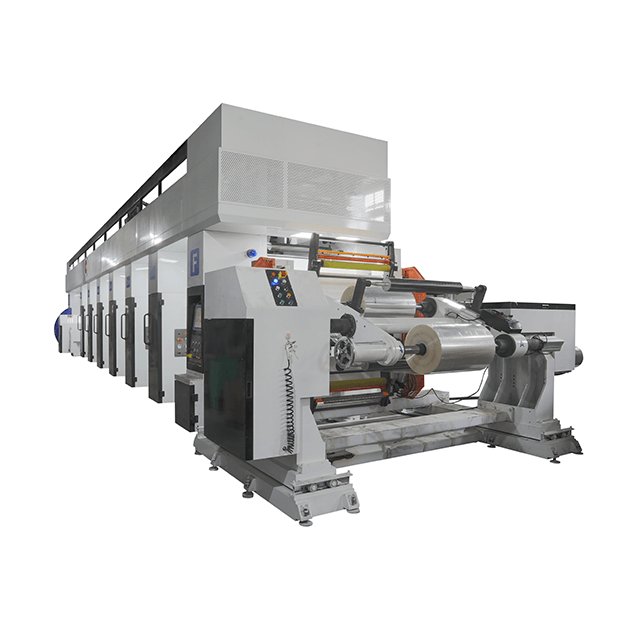
Evaluating a robust Gravure Printing Machine requires examining its distinct mechanical zones in great detail. Each major section contributes significantly to overall print fidelity and maximum operational speed. Buyers must scrutinize these core components during the procurement phase.
Unwind and Rewind Stations: These massive components flawlessly manage continuous web handling. Modern machines feature highly sophisticated automated splicing systems. They attach a fresh roll of raw material without ever stopping the main press. Uninterrupted high-speed runs drastically maximize daily throughput and completely prevent costly machine downtime. Splicing units utilize optical sensors to match web speeds perfectly before firing the cutting knife.
Printing Units: A standard unit actively houses the heavy cylinder, ink pan, doctor blade assembly, and impression roller. Buyers must strictly evaluate the structural chassis rigidity. Heavy-duty cast iron frames provide crucial mechanical vibration dampening. This foundational stability actively prevents unwanted chatter marks on the final printed substrate. Inferior frames inevitably flex under high impression pressures, leading to catastrophic misregistration.
Drying Systems: Fast and consistent solvent evaporation strictly dictates your maximum production speed. Buyers must evaluate thermal efficiency by closely comparing gas burners to industrial electric heaters. Effective exhaust management remains equally mandatory. It safely removes dangerous volatile organic compounds (VOCs) entirely from the printing facility. Advanced systems actively recirculate hot air to minimize overall energy consumption while maintaining peak drying capacity.
Tension Control Systems: Maintaining exact web tension across all stations remains absolutely non-negotiable. Substrates easily stretch or shrink as they travel between individual printing units. Automated load cells continuously monitor web tension in real-time. They immediately adjust adjacent roller speeds to prevent catastrophic color misregistration. Even minor tension fluctuations ruin complex multi-color designs, resulting in hundreds of meters of wasted material.
Choosing the correct architectural solution heavily defines your operational success and market competitiveness. Equipment manufacturers offer distinct machine configurations uniquely tailored to specific production scales. You must match the technology to your daily operational demands.
Electronic Shaft Rotogravure Printing Machine:
Outcome: This advanced enterprise architecture entirely replaces traditional mechanical drive shafts. It strategically installs individual, high-precision servo motors at every single print station.
Benefit: It completely eliminates all physical mechanical backlash. An Electronic Shaft Rotogravure Printing Machine delivers significantly faster job setup times. It also offers superior micro-precision for incredibly complex, multi-color flexible packaging jobs. Operators easily save job parameters digitally for instant recall during repeat orders.
3 Motor Gravure Printing Machine:
Outcome: This architecture serves as a highly reliable, cost-effective industrial alternative. It expertly utilizes three independent drive motors for unwinding, main web traction, and rewinding.
Benefit: A 3 Motor Gravure Printing Machine provides highly stable and consistent tension control. It easily handles standard flexible packaging runs without incurring the steep premium cost associated with full electronic shaft systems. It strikes a perfect balance between mechanical simplicity and operational reliability.
ARC (Automatic Register Control) Rotogravure Printing Machine:
Outcome: This specialized system seamlessly integrates advanced optical tracking sensors. They continuously monitor and proactively adjust multi-color alignment in absolute real-time.
Benefit: An ARC Rotogravure Printing Machine drastically reduces expensive start-up material waste. It actively ensures zero visible color drift during exceptionally long, continuous high-speed production runs. The automated software instantly corrects micro-deviations before they ruin the visual output.
We must analyze specific business thresholds before committing massive capital to new hardware. Gravure excels remarkably in specific high-volume scenarios but struggles in quick-turnaround environments. Let us examine the defining commercial factors.
Volume Thresholds: You must candidly assess your operational break-even points. Engraving heavy copper cylinders demands extremely high upfront capital investment. Typically, commercial operations strictly require print runs exceeding 50,000 to 100,000 units. These massive, sustained volumes easily justify the initial cylinder engraving costs. At this specific scale, the per-unit printing cost drops dramatically. Gravure eventually becomes significantly cheaper than flexography over massive, multi-day production runs.
Substrate Versatility vs. Flexography: Gravure consistently handles incredibly difficult materials flawlessly. You can expertly print on ultra-thin BOPP, delicate PET films, or highly stretchable polyethylene. You can also print on thick, premium paperboard destined for luxury folding cartons. The intaglio process naturally maintains incredible dot fidelity across wildly diverse surfaces. Flexography often struggles significantly to match this deep tonal range on non-porous synthetic films. The direct ink transfer mechanism guarantees vibrant solid colors.
Image Quality Continuity: The global packaging industry relies heavily on gravure for continuous, seamless visual patterns. The meticulously engraved cylinder entirely lacks a visible plate gap. This unique physical trait makes it absolutely perfect for printing decorative wallpapers. It also dominates the market for woodgrain furniture laminates and continuous flexible pouches. Flexographic plates always leave a faint seam where the polymer plate ends meet. Gravure entirely eliminates this structural flaw.
Let us summarize the core structural differences between gravure and alternative printing methods using a clear comparison.
Performance Metric | Gravure Processing | Flexographic Processing |
|---|---|---|
Initial Tooling Setup Cost | Very High (Copper Cylinder Engraving) | Moderate (Photopolymer Plates) |
Optimal Run Length Suitability | Ultra-Long Production Runs | Short to Medium Production Runs |
Maximum Image Resolution | Exceptional Dot Fidelity & Sharpness | Good, but prone to visible dot gain |
Continuous Seamless Patterns | Yes (Completely Seamless Output) | No (Visible plate mounting gap) |
Ink Deposition Volume | High (Vibrant solids and rich metallics) | Moderate (Requires complex anilox selection) |
A successful industrial deployment goes far beyond the initial equipment purchase order. Facility managers constantly face stringent environmental safety guidelines and heavy logistical burdens. You must prepare your infrastructure thoroughly.
Environmental & Safety Compliance: Traditional solvent-based inks continuously emit highly hazardous chemical fumes. You must invest heavily in robust, industrial-grade ventilation systems. Installing Lower Explosive Limit (LEL) monitors effectively protects your entire facility from catastrophic fire risks. Advanced solvent recovery systems capture fugitive emissions before they escape outside the building. These expensive systems keep your daily operation strictly compliant with federal environmental regulations. Failure to manage solvent vapors invites severe regulatory fines.
Cylinder Management: You absolutely cannot ignore the massive hidden logistical costs. Heavy, chrome-plated steel cylinders require highly specialized, reinforced storage racks. Moving them constantly requires dedicated overhead hoists and specifically reinforced concrete flooring. Operators must meticulously clean and maintain these heavy cylinders. Remaining dried ink easily ruins the microscopic cells. Dedicated cylinder washing machines become a mandatory auxiliary investment for any serious facility.
Operator Expertise: Every modern Rotogravure Printing Machine presents a remarkably steep operational learning curve. Historically, operators manually turned mechanical knobs and adjusted physical gears. Today, the landscape looks entirely different. Advanced ARC systems and sophisticated electronic shaft controls demand a highly technical skill set. Your production team urgently needs individuals skilled in rapid software diagnostics. They must master real-time digital troubleshooting rather than relying solely on traditional mechanical adjustments.
The gravure process remains entirely unmatched for high-volume, extremely high-fidelity industrial printing. However, your long-term commercial success depends heavily on deploying the exact machine architecture tailored to your goals. You must analyze your product mix carefully.
We advise prospective buyers to prioritize equipment configurations based heavily on core operational metrics. Accurately identify your most common packaging substrates and your strictly required job changeover frequency. A reliable 3-motor architecture serves perfectly well for steady, highly standardized runs. Conversely, a fully servo-driven electronic shaft system provides the immense digital agility needed for frequent, complex job changes.
Always evaluate your absolute minimum run lengths thoroughly before finalizing any major procurement contract. We strongly prompt you to consult directly with specialized equipment engineers. Discuss your specific substrate challenges and production speeds openly. They will expertly help you match precise machine specifications to your demanding production scale. Proper alignment guarantees maximum efficiency, reduces unnecessary material waste, and secures long-term operational profitability.
A: A high-quality gravure cylinder easily lasts for millions of impressions. Manufacturers apply a highly durable chrome plating directly over the delicately engraved copper surface. When this outer protective chrome layer eventually wears down, technicians can chemically strip and re-plate it. This process effectively restores the cylinder to peak operating condition, extending its useful mechanical life almost indefinitely.
A: A traditional mechanical line shaft utilizes physical gears and a central drive rod to synchronize printing stations. It naturally suffers from slight mechanical backlash. An electronic shaft replaces these physical gears with independent servo motors at each print unit. This digital synchronization provides superior tension precision, incredibly faster setup times, and drastically reduces physical registration errors.
A: Yes, operators increasingly transition to water-based inks for stricter environmental compliance. However, water evaporates much slower than traditional chemical solvents. This specific shift requires specialized, significantly longer drying tunnels featuring higher thermal output. It also requires highly precise, shallow-cell cylinder engraving to ensure proper ink transfer and strictly prevent unwanted production drying delays.
A: The doctor blade physically wipes excess fluid ink entirely from the smooth non-image areas of the rotating cylinder. It ensures ink only remains trapped inside the engraved microscopic cells. Even minor steel blade wear dramatically impacts overall print consistency, causing unwanted background tinting. Operators must continuously monitor blade angles and replace them strictly on rigid schedules.