Views: 0 Author: Site Editor Publish Time: 2026-08-03 Origin: Site
Deciding between print technologies is rarely a simple debate about quality versus speed. You are making a critical capital expenditure. This choice directly shapes operational strategy for packaging manufacturers and brands. We are currently witnessing a massive shift across the packaging industry. Rapid SKU proliferation drives digital adoption at lightning speed. However, maintaining absolute consistency across massive volumes still relies heavily on traditional methods. This dynamic creates a difficult choice for procurement teams. Our goal is to provide a realistic, evidence-based breakdown of unit economics, operational realities, and capability limits. We will help you navigate this complex landscape. By understanding these factors, you can confidently choose between investing in a highly agile digital press or a heavy-duty, commercial Gravure Printing Machine.
Volume dictates the winner: Digital printing owns the short-run and variable data market (under 5,000–10,000 units), while gravure becomes exponentially more cost-effective at high volumes.
Initial setup costs vary wildly: Gravure requires significant upfront capital for cylinder engraving; digital has zero plate or cylinder costs.
Quality is comparable but different: Gravure offers unmatched spot color accuracy and edge sharpness on flexible substrates; digital excels at high-resolution variable imagery but may struggle with specific metallic or Pantone matches.
Equipment evolution narrows the gap: Modern equipment, such as the Electronic Shaft Rotogravure Printing Machine, drastically reduces setup times and waste, making gravure competitive at slightly lower run lengths than older mechanical systems.
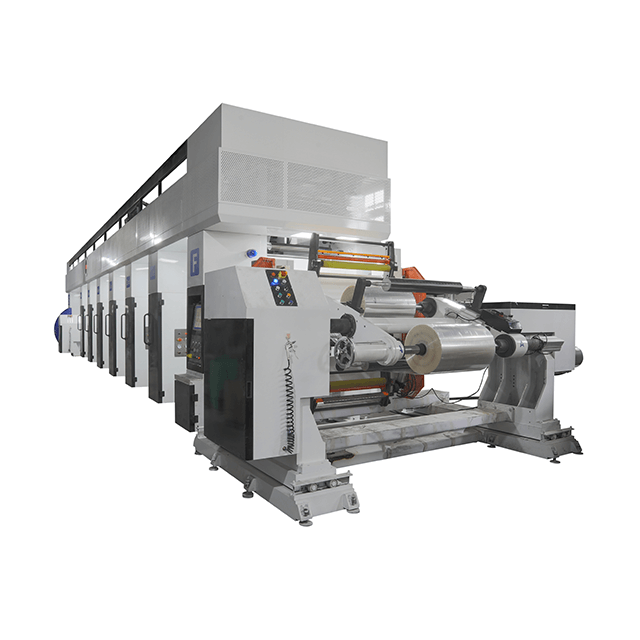
Gravure uses an intaglio printing method. This means the image area is engraved directly into a cylinder. During operation, a Rotogravure Printing Machine rotates a copper-plated steel cylinder through an ink pan. A steel doctor blade wipes excess ink from the smooth non-image areas. The ink remains only inside tiny, etched micro-cells. An impression roller then presses the moving substrate firmly against the cylinder. This action transfers the ink directly onto the film or paper. Operators rely on this physical transfer for unmatched consistency. It ensures every single print perfectly matches the first, even after hundreds of thousands of impressions.
Digital printing relies on plateless technology. It entirely removes physical image carriers from the equation. Presses typically use either electrophotography (toner-based) or piezoelectric inkjet technology. The machine applies liquid ink or dry toner directly onto the substrate. The image is generated layer by layer from a digital file. This method essentially prints a fresh, unique image during every single revolution. Because it skips plate-making, you can start printing almost immediately. However, it requires highly specialized print heads and constant calibration.
These two technologies demand completely different factory environments. A traditional gravure operation requires a large physical footprint. You must install heavy-duty web handling infrastructure. Facilities also need expansive storage racks for heavy steel cylinders. Furthermore, strict environmental safety measures are necessary for solvent recovery systems. In contrast, a digital press occupies much less floor space. Yet, it introduces its own strict demands. Digital systems require precise climate control. Humidity and temperature fluctuations easily disrupt delicate inkjet nozzles. You also frequently need proprietary pre-treated substrates to ensure ink adhesion.
The upfront costs clearly define the battle line between these methods. Gravure demands significant initial capital. You must pay to engrave a separate metal cylinder for every single color in a design. If a package has eight colors, you need eight custom cylinders. This pre-press investment is substantial. Conversely, digital printing boasts zero setup costs for physical plates. You upload an art file, rasterize it, and begin printing. For new product launches, this zero-setup advantage is highly attractive.
The cost dynamic flips entirely once the press starts running. Digital inks are expensive. Manufacturers also frequently impose "click charges" for machine maintenance per impression. These variable costs remain flat. You pay the exact same high rate for the first unit and the millionth unit. Gravure ink costs are dramatically lower. Facilities buy bulk solvent or water-based inks at a fraction of the price. While gravure wastes some substrate during initial registration, the running costs are incredibly low.
Every packaging buyer must understand the crossover point. This is the exact production volume where gravure becomes cheaper than digital. The exact figure depends heavily on the number of SKUs and colors. Typically, we see this threshold sit between 10,000 and 15,000 meters of material.
Metric | Gravure Printing | Digital Printing |
|---|---|---|
Pre-press Cost | High (Cylinder engraving required) | Zero (Direct file-to-print) |
Ink Cost Per Unit | Very Low (Bulk ink purchasing) | High (Specialty inks and click charges) |
Break-even Volume | Highly profitable above 15,000 meters | Highly profitable below 10,000 meters |
Waste During Setup | Moderate to High (Calibration needed) | Extremely Low (First print is sellable) |
Gravure inherently demands high minimum order quantities. Converters must absorb the labor of loading heavy cylinders and threading the press. High MOQs spread these fixed costs across thousands of units. This makes individual packages incredibly cheap. Digital flips this model. It enables just-in-time (JIT) manufacturing. Brands can order exactly what they need for a specific week. This eliminates massive warehousing costs. It supports a zero-inventory model for nimble marketing campaigns.
Brand managers heavily scrutinize color consistency. Coca-Cola red must look identical worldwide. Gravure dominates this requirement. The process handles custom spot colors flawlessly. Ink technicians physically mix the exact Pantone shade in a bucket. The etched cylinder transfers an opaque, solid layer of this specific ink. Gravure also excels at laying down brilliant metallics and solid opaque whites on clear films. Digital generally uses a CMYK or expanded gamut process to simulate spot colors. While digital simulations are impressive, they sometimes struggle to match specific metallic sheens accurately.
Digital technology completely dominates when handling variable data printing (VDP). Every single impression can feature a different image. You can print serialized barcodes, unique QR codes, and individualized consumer names. High-end inkjet produces stunning, continuous-tone graphics. It handles delicate gradients beautifully. Gravure struggles with variable data. The engraved image is permanent. You cannot change a barcode without stopping the press and physically replacing the metal cylinder.
Material compatibility greatly influences operational flexibility. A heavy-duty commercial press handles massive rolls of cheap materials. It effortlessly prints on untreated polyethylene, BOPP, shrink sleeves, thin foils, and rough papers. The solvent inks bite aggressively into these surfaces. Digital presses are far more sensitive. They frequently require expensive proprietary primers. Without these chemical topcoats, digital ink might pool or flake off certain flexible plastics. This requirement limits your material sourcing options.
Speed to market is a critical metric for consumer brands. Traditional methods face inherent delays. Producing copper-plated cylinders is an industrial process. You must factor in design approvals, cylinder engraving, and physical shipping from the engraver to the printing facility. This cycle often requires a two-to-four-week lead time. It forces brands to plan product launches months in advance.
Digital technology offers unparalleled supply chain agility. You achieve same-day proofing effortlessly. If regulatory agencies demand a sudden ingredient change, you simply edit the digital file. The updated packaging can hit the press an hour later. You can launch highly targeted, regional marketing campaigns. You can print 500 seasonal snack bags for a local festival without disrupting a main production schedule.
Downtime destroys profitability on the factory floor. Traditional setups require intense manual labor during changeovers. Operators must drain ink pans, wash down stations with solvent, and physically swap out heavy cylinders. Even with automated wash-up systems, this takes hours. Digital systems eliminate physical changeovers. An operator merely queues up the next job on a computer screen. The press seamlessly transitions from printing coffee bags to pet food pouches without stopping the web.
Equipment evolution continues to narrow the gap between these two technologies. Historically, mechanical line shafts connected all printing stations via complex gearboxes. This caused minor registration errors and created massive setup waste. Today, the modern standard is the Electronic Shaft Rotogravure Printing Machine. This technology uses individual servo motors for each printing station.
Faster Registration: Independent drives sync perfectly via digital encoders.
Reduced Waste: Operators achieve accurate color registration in a fraction of the time.
Shorter Runs: Because setup waste drops dramatically, these machines compete effectively on medium-length runs.
Not every facility needs a massive, multi-station commercial line. Smaller operations often benefit from a different approach. A Manual Gravure Printing Machine serves a very specific purpose. Technicians use these smaller footprint machines for laboratory testing and ink proofing. They are also perfect for niche, highly specialized short-run manual applications. They provide an affordable entry point when high-end automation is unnecessary.
The industry is moving toward hybrid solutions. Many converters now retrofit their traditional production lines. They install digital inkjet stations directly over the existing web path. This powerful combination allows a single machine to lay down cheap, high-volume base colors using physical cylinders. Then, the digital station prints variable data, like unique promo codes, over the solid background. It captures the best of both operational worlds.
Neither print technology objectively defeats the other. They serve entirely different strategic needs. The correct choice depends entirely on your SKU velocity, brand color requirements, and average run lengths. If you prioritize variable marketing and minimal inventory, digital is ideal. If you require millions of perfectly matched candy wrappers, traditional intaglio methods remain unbeatable.
For your next steps in procurement, we recommend a data-driven approach. First, audit your average run lengths across all product lines over the past 12 months. Second, factor in the hidden costs of physical cylinder storage and handling. Finally, request a custom break-even analysis from your equipment manufacturer. Always evaluate these metrics before committing your capital to a new digital line or a commercial print system.
A: Traditionally, no, due to the high upfront costs of cylinder engraving. However, utilizing an electronic shaft rotogravure machine drastically reduces setup waste and registration time. This technological advancement makes medium-short runs significantly more viable and profitable than they were a decade ago.
A: Digital printing generally produces less physical waste because it eliminates cylinders and reduces setup substrate scrap. It also emits fewer VOCs. However, modern gravure machines equipped with advanced solvent recovery systems and water-based ink capabilities are rapidly closing the sustainability gap at high production volumes.
A: While high-end digital inkjet provides excellent visual resolution, it still behaves differently at a microscopic level. The direct physical transfer of liquid ink from the precisely etched cells of a gravure cylinder still provides superior, razor-sharp edge definition for fine text and solid blocks of color.
A: A chrome-plated gravure cylinder is incredibly durable. It can last for millions of impressions and is easily re-chromed when worn. In contrast, digital print heads require regular maintenance, frequent cleaning cycles, and highly expensive periodic replacements based on total usage hours.