Views: 0 Author: Site Editor Publish Time: 2026-08-31 Origin: Site
Choosing between flexographic and gravure printing goes far beyond a simple technical preference. You are making a critical capital expenditure decision. This choice dictates your long-term profit margins, production agility, and market positioning. Production managers face immense pressure to optimize every print run while keeping expenses low. Getting this equipment investment right matters deeply. Flexo technology has advanced significantly in recent years, boosting its high-definition quality capabilities. However, gravure remains the undisputed gold standard for specific high-volume applications requiring unmatched color consistency. This guide breaks down the operational realities and exact break-even thresholds of both major technologies. You will discover how to evaluate equipment setups directly against your daily production needs. We will help you align your machinery investment with actual client demands. Read on to ensure your packaging line remains competitive, responsive, and highly profitable in today's market.
Volume dictates the winner: Flexo dominates short-to-medium runs due to cheaper prepress plates, while gravure's high cylinder costs are absorbed efficiently in ultra-long, continuous runs.
Quality vs. Versatility: Gravure offers unmatched continuous-tone image reproduction; flexo provides broader substrate versatility, including highly textured surfaces.
Equipment configurations drive ROI: Selecting specific setups, such as an 8 color gravure printing machine, requires aligning ink systems, solvent recovery, and substrate types with your target market.
TCO goes beyond the press: Environmental compliance, operator expertise, and changeover downtime must be factored into the final decision matrix.
Every packaging facility eventually faces a crossroads regarding print technology. The foundation of this choice lies in the core mechanics of each method. Flexography relies on a relief printing process. Flexible photopolymer plates carry the ink on raised surfaces. They transfer images directly onto the substrate. Gravure uses an intaglio process. Engraved metal cylinders feature millions of microscopic cells. These cells hold precise ink volumes and transfer them under pressure.
These mechanical differences create a distinct business trade-off. You must balance upfront tooling costs against per-unit production expenses. Flexo offers cheaper plates and faster setups. Gravure demands expensive cylinder engraving but delivers extreme durability. You absorb the cylinder costs over millions of impressions.
Strategic alignment ensures you buy the right equipment for your market. Evaluate your typical client demands. Do your clients require frequent SKU changes and localized promotions? Flexo handles short runs brilliantly. Do you service global brands needing massive, standardized rollouts? Gravure guarantees absolute uniformity across global supply chains.
Many buyers focus purely on machine speed. They ignore average run lengths. A fast machine loses its advantage if operators spend hours swapping heavy cylinders for tiny print jobs.
Flexography has transformed the packaging industry. It offers a highly agile solution for modern, fast-paced supply chains.
Lower initial tooling costs: Photopolymer plates cost significantly less than engraved steel or copper cylinders. This reduces the financial barrier for new product launches.
Faster prepress turnaround: Operators mount flexible plates quickly. Job changeovers happen rapidly, allowing facilities to process multiple short runs daily.
High substrate adaptability: Flexo prints beautifully on corrugated board, shrink plastics, textured labels, and metallic films. It accommodates uneven surfaces effortlessly.
Easier environmental compliance: Flexo machines easily adopt water-based and UV inks. This eliminates heavy reliance on hazardous solvents.
Resolution challenges: Flexo historically struggled with smooth gradients and continuous tones. High-definition flexo is closing this gap, but limitations remain.
Plate wear: Photopolymer plates degrade over long continuous runs. Operators must occasionally stop the press, replace worn plates, and recalibrate color settings.
The halo effect: Pressure variables sometimes push ink out to the edges of text or fine lines. This creates a visible "halo" effect under close inspection.
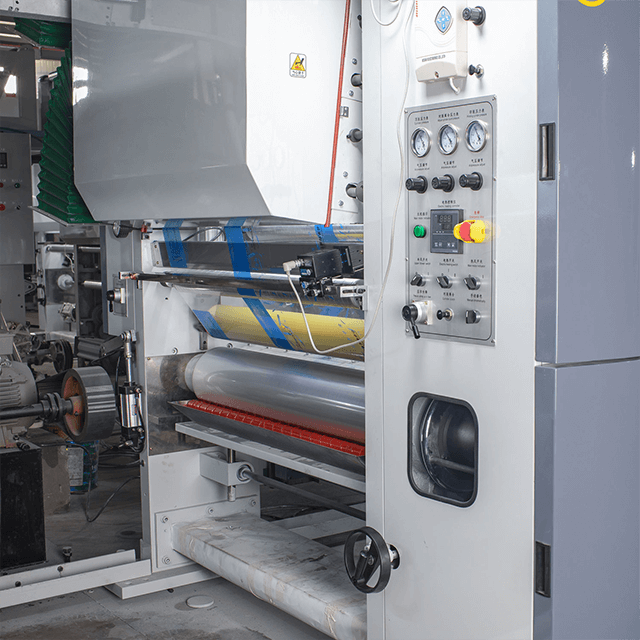
Gravure printing handles the most demanding, high-volume jobs in the industry. It excels where absolute perfection is non-negotiable. If you run a high-capacity facility, investing in a standard Gravure Printing Machine often yields the highest long-term profitability.
Unmatched graphic fidelity: Gravure delivers flawless continuous tone reproduction. It applies dense, precise ink laydowns for vibrant imagery.
Extreme durability: Engraved metal cylinders endure millions of impressions. They never degrade during a run. You get exact color consistency from the first impression to the millionth.
High operational speeds: Operators rarely stop a gravure press for mid-run adjustments. The robust cylinders allow the machine to run continuously at maximum speeds.
Significant upfront investment: Engraving custom metal cylinders requires substantial capital. This makes short runs financially unviable.
Longer prepress lead times: Cylinder creation takes days or weeks. You cannot execute rapid SKU changes or last-minute localized campaigns easily.
Solvent dependency: Gravure heavily relies on solvent-based inks. Your facility will require robust ventilation and strict solvent recovery systems.
Choosing the base technology is only the first step. You must configure the machinery to match your specific production requirements.
When evaluating a Rotogravure Printing Machine against a flexo equivalent, focus on material handling. Gravure excels with thin, extensible films. Pay close attention to web tension controls, drying tunnel efficiency, and automated register controls. These elements prevent material stretching during high-speed solvent drying phases.
Throughput scaling dictates your upgrade path. You should upgrade to a High Speed Gravure Printing Machine when ultra-long runs dominate your schedule. Faster web speeds directly reduce per-unit production costs. They maximize the profitability of massive continuous orders.
For complex packaging designs, color capacity matters. Assessing an 8 Color Gravure Printing Machine allows you to handle reverse printing, specialized coatings, and intricate designs simultaneously. You can apply spot colors and cold seal adhesives in a single pass. This reduces secondary processing steps.
Flexo presses come in three distinct architectural configurations. You must choose the right layout for your primary substrates.
Central Impression (CI): All print decks surround a single large drum. The drum supports the substrate perfectly. CI presses handle thin, stretchy flexible films with superior registration accuracy.
Inline: Print stations sit in a straight line. This layout suits folding cartons, labels, and thicker materials requiring die-cutting or inline converting.
Stack: Print decks stack vertically. This configuration saves floor space. Operators use stack presses for printing on both sides of a web simultaneously, often for heavy bags or sacks.
You maximize margins by matching the right machine to the right job. The following analysis helps you determine where each technology truly belongs on your production floor.
The table below summarizes the operational breakdown between the two dominant technologies.
Evaluation Metric | Flexographic Printing | Gravure Printing |
|---|---|---|
Ideal Run Length | Short to Medium (Under 100,000) | Ultra-Long (Over 500,000) |
Tooling Cost | Low (Photopolymer) | High (Engraved Metal) |
Substrate Versatility | High (Textured, Uneven, Corrugated) | Moderate (Best for Smooth Films/Paper) |
Image Fidelity | Very Good (Improving with HD) | Flawless (Continuous Tone) |
Calculating the exact run-length threshold is critical. The high setup cost of gravure eventually becomes cheaper per unit than flexo. Follow these steps to find your break-even point:
Calculate the total cost of flexo plates for a specific job.
Calculate the total cost of engraved gravure cylinders for the same job.
Determine the hourly running cost of both presses (including ink, energy, and labor).
Plot the per-unit cost across increasing volumes.
You will find a distinct volume threshold where the gravure line dips below the flexo line. For many flexible packaging jobs, this threshold sits between 300,000 and 500,000 impressions.
Both methods compete fiercely in flexible packaging. Gravure wins for premium, high-volume consumer goods. Snack food conglomerates demand gravure for millions of identical wrappers. Flexo wins for regional brands or promotional packaging. Small-batch craft coffee roasters prefer flexo to manage frequent flavor changes.
Flexo stands as the undisputed champion for abrasive or uneven surfaces. The soft photopolymer plates conform to the flutes of corrugated board. Gravure cylinders cannot press effectively into deep textures without crushing the material.
Gravure dominates security printing. Currency, high-end tax stamps, and security labels require precise line-work. The intaglio process deposits thick, tactile ink layers. Gravure also excels at printing imitation wood grain and decorative laminates. The seamless continuous cylinders prevent visible joint lines on wallpaper and flooring materials.
Purchasing the hardware only solves half the equation. You must prepare your facility for the distinct operational challenges each technology introduces.
These two technologies require entirely different skill sets. Gravure demands specialized training. Operators handle incredibly heavy metal cylinders. They must understand complex solvent management systems. They monitor viscosity meticulously.
Flexo operations lean heavily on modern automation. Prepress technicians use software to manage high-definition plate making. Operators utilize automated sleeve mounting systems. The physical burden is lower, but software proficiency is higher.
Cross-train your senior operators before installing a new press. Send them to the manufacturer's facility for hands-on trials. Do not wait until the machine arrives on your floor to begin workforce education.
Regulatory realities heavily influence this decision. Gravure primarily relies on solvent-based inks. These inks release Volatile Organic Compounds (VOCs). Your facility must install, operate, and maintain expensive oxidizers and solvent recovery systems to meet emission laws.
Flexo provides a much easier path to environmental compliance. Most modern flexo operations utilize water-based or UV-curable inks. These generate near-zero VOC emissions. If strict local environmental laws govern your facility, flexo drastically reduces your regulatory burden.
Consider your tooling supply chain carefully. Gravure facilities typically outsource cylinder engraving to specialized external partners. You rely completely on their shipping schedules. A delayed cylinder halts your entire production run.
Flexo facilities often bring plate-making in-house. You can install a plate imager and processor nearby. If a plate breaks mid-run, your prepress team can produce a replacement within hours. This internal control significantly reduces supply chain vulnerability.
The choice between flexo and gravure printing requires careful analysis. The final decision depends heavily on your typical run lengths, required image fidelity, and specific substrate types. Flexo delivers unmatched agility, lower upfront tooling costs, and diverse material handling. Gravure guarantees flawless continuous-tone reproduction and absolute consistency across massive, uninterrupted runs.
To move forward confidently, take action based on your unique facility data. We recommend conducting a comprehensive print-trial audit. Request sample outputs on your exact targeted substrates from equipment manufacturers. Calculate a five-year operational expense forecast based on your projected job volumes, factoring in ink, energy, and tooling replacement.
Do not make this decision in isolation. Encourage your production team to consult directly with specialized equipment engineers. Audit your facility's ventilation, floor space, and operator skill levels before finalizing any machine purchase. A strategic evaluation today ensures highly profitable packaging operations tomorrow.
A: Cost-effectiveness depends entirely on run length. Flexo remains highly cost-effective for short and medium runs because photopolymer plates are inexpensive. Gravure becomes the cheaper option per unit for massive, continuous runs. The expensive cylinder costs spread out over millions of impressions, making it highly efficient at scale.
A: Yes, but it presents technical challenges. Water-based inks dry much slower than solvent-based inks. You must significantly upgrade the drying tunnels and air velocity systems. While industry advancements are improving water-based gravure inks, solvent-based inks remain the dominant choice for maximizing high-speed press performance.
A: A high-quality engraved chrome-plated gravure cylinder easily exceeds several million impressions without losing image detail. In contrast, a standard flexo photopolymer plate typically lasts between 500,000 and 1,000,000 impressions before showing visible wear. Operators must replace flexo plates far more frequently during extended runs.
A: Flexo holds a massive advantage in changeover speeds. Modern flexo presses utilize lightweight sleeve technologies. Operators can swap jobs in under an hour. Gravure requires lifting and swapping heavy metal cylinders, often demanding specialized hoists. Gravure changeovers take significantly longer, making them unsuitable for frequent job switching.